Basohli Festival – Three

Basohli Festival – Three
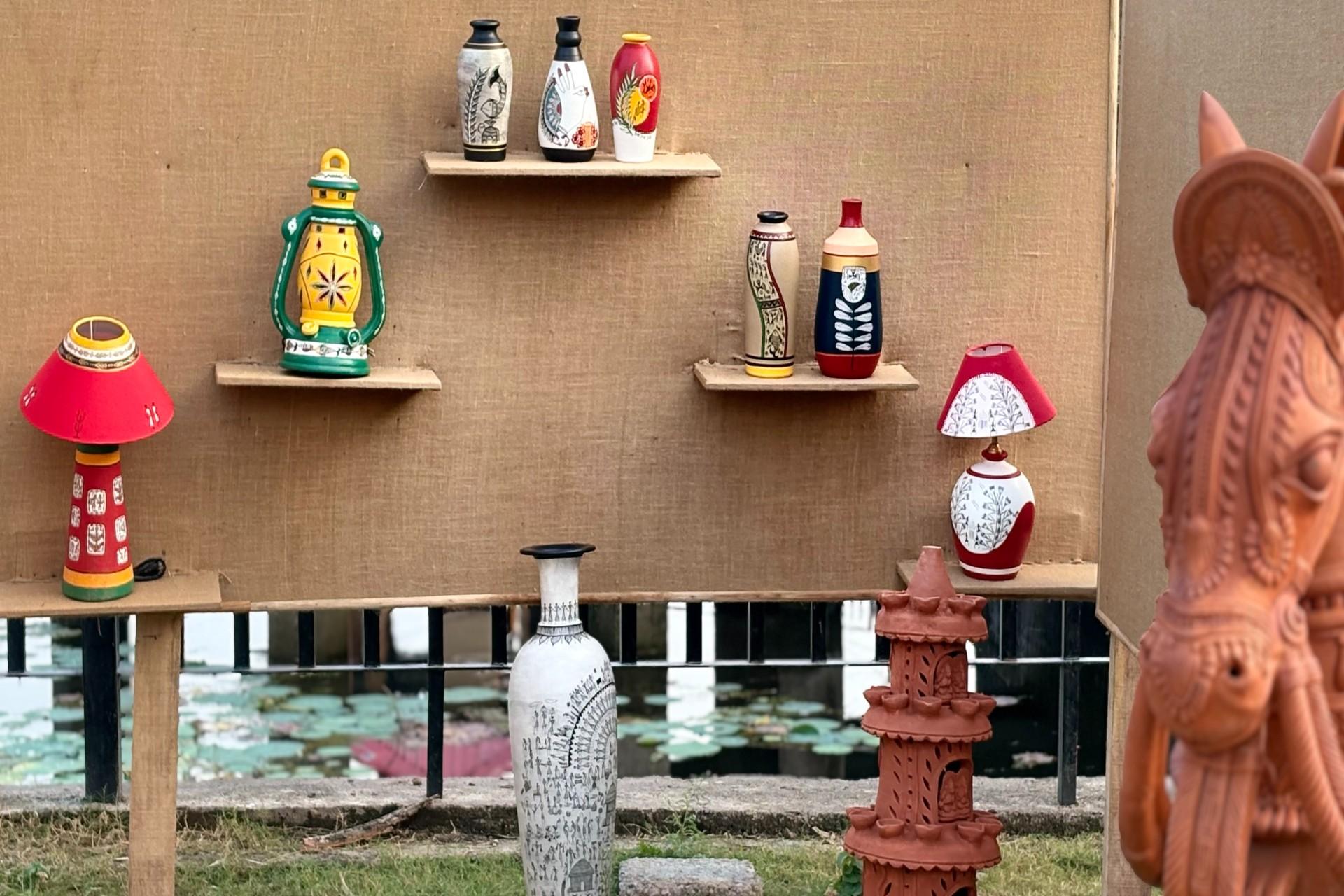
'Kala-Gram' represents an extraordinary concept. During the Basohli Festival held in 2025, 'Vishwasthali' and the 'Indira Gandhi National Centre for the Arts' brought the vision of 'Kala-Gram' to life at the town's historic pond. This beautiful concept of 'Kala-Gram' was warmly embraced by the local people.
A magnificent exhibition centered on the ‘pottery tradition’ was organized in this very ‘Art Village’ (Kala-Gram). Traditional rural homes, beautiful clay artifacts, earthenware used in daily life, toys, and more were put on display.
Freed from symbols of servitude, ‘Kala Gram’ was awakening a sense of pride in ourselves within our hearts and minds. Indian culture and heritage were reflected in every single aspect of the place.
‘Kala Gram’ embodied the power of unity within society, conveying the message that one must steadfastly tread the path of duty to realize one’s dreams over the next 25 years.
In Indian tradition, earth is considered supremely sacred, and the artisan who works with clay holds a place of high esteem in society. Earthen lamps symbolize purity, and the light emanating from them embodies the aspiration for prosperity. With this very sentiment in mind, the final day of the third ‘Basohli Utsav’ was dedicated to ‘Deepotsav’—a celebration of lamps.
Hundreds of lamps, collected from various states, were lit here. In fact, ‘Deepotsav’ is a call to light a lamp dedicated to the nation.
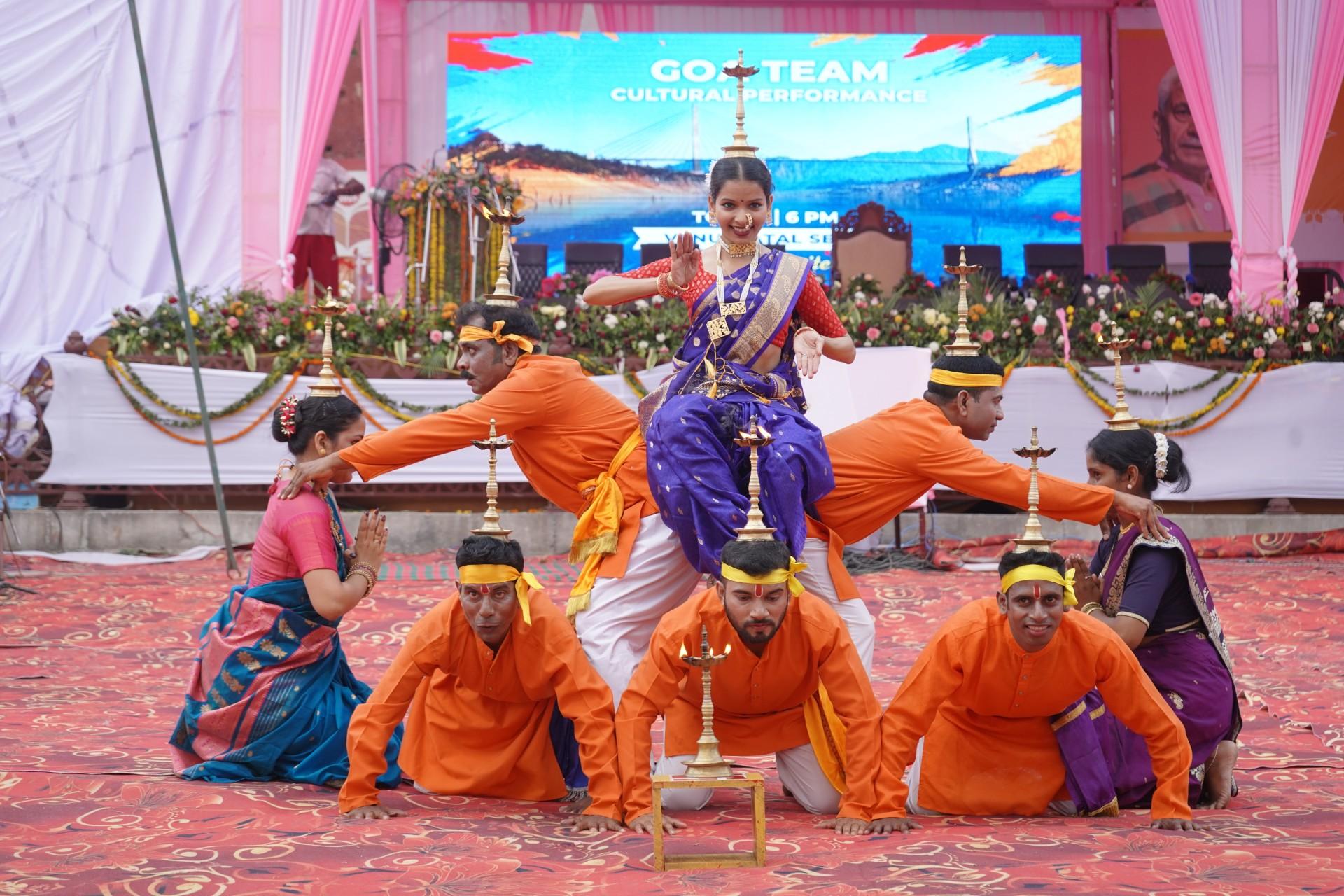
Several exhibitions were organized during the three-day Basohli Festival. Glimpses of Ramlila performances from across the country were showcased. In particular, the Hanuman dance performed by an artist from Ayodhya was greatly appreciated by the audience. Glimpses of local folk art and culture were displayed in the authentic Dogri style.
Handicrafts made of bamboo and grass were displayed at another corner of the historic pond, attracting people of all ages.
It is well known that the local art form known as Basohli painting represents a unique cultural heritage. The Jammu Centre of the Indira Gandhi National Centre for the Arts (IGNCA), in collaboration with Vishwasthali, has been consistently striving to promote this art form. During the festival, a workshop on Basohli painting was organized; with the support of the Lalit Kala Akademi, it was elevated to the status of a national-level workshop.
Artists from various states participated in this workshop. Painters ranging from West Bengal to Rajasthan took part, and budding artists from Basohli participated with great enthusiasm.
The third 'Basohli Utsav' became particularly memorable because the tradition of the 'Purushni Aarti' was initiated during this event. Purushni is the ancient name of the Ravi River. While historical and religious contexts indicate that a tradition of performing aarti on the riverbank once existed, it had faded away over time. It is heartening that the Purushni Aarti was launched with great grandeur during the third Basohli Utsav.
The tradition of worshipping rivers and expressing gratitude towards them—rooted in Sanatan tradition—was revived. A large number of devotees participated in the Maha Aarti held at the Atal Setu in Basohli and took part in a ceremonial procession.